|
Tips to help you connect your family to nature!
|
|
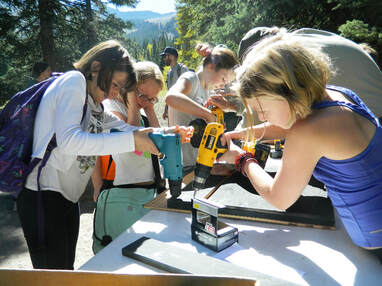
Elementary students from the North Fork Valley construct blue bird nest boxes for their schoolyard habitats during a Public Lands Day celebration on the Gunnison National Forest. It's only natural that kids have some level of fascination with nature – don’t we all? What a thrill to see herds of elk in a meadow, a cow and calf moose in a willow wetland, or the bright blue flash of a bird flying across your path. The more kids see and learn about these critters, the more they may be inclined to want to DO something to help them. Earth Day in April is often the day where we become more aware of nature and focus on the environment and how to engage in actions to help our planet, but this can be accomplished anytime. Bluebird boxes are one of the ways to engage kids in crafty activities that help them learn about nature and provide nesting spots for our local population of bluebirds. Jon Horn of the Black Canyon Audubon Society (BCAS) puts in many hours creating blue bird box kits for kids to construct and hang in the best locations to attract nesting blue birds. For each kit, he assembles the house to make sure the pieces fit, takes them apart, and then puts them in a bag that includes directions. What a winning project (and an easy one!) for teachers to incorporate into their environmental education curriculum or Earth Day activities. Outdoor education teacher Krista Javoronok of Ridgway Elementary School loves doing this activity every spring with her 1st grade students. Ouray elementary 1st graders also participated this year by hanging their boxes in a park in Ouray. They did this, along with teacher Jen Anessi and Ouray parks department employee Sean Hart, to help the Mountain Bluebirds in the area. Are you familiar with a river trail or other landscapes with flowing water adjacent to an open field? If you think about it – you may already know a perfect place to hang a blue bird box. What a pleasant surprise for your kids when the birds decide to move in and make it their new nesting spot! There are many kits available online or instructions to make your own. A couple resources are: Free Bluebird House Plans - Multiple Designs and the Colorado Bluebird Project at: Colorado Bluebird Project | Castle Rock, CO - Official Website. Or you can contact the Audubon Society for one of their kits! Members of the BCAS also design, build, and sell elaborate bird boxes at county fairs. By engaging kids in these crafty and fun projects, we can extend that interest and concern beyond Earth day throughout the rest of the year. Nature activities can show kids how to be stewards and learn more about animal behaviors and habitat needs. What else can you do with youth to help nature? Project Learning Tree (PLT) is an award-winning environmental education program designed for educators, parents, and community leaders working with youth from preschool through grade 12. It offers hands-on lessons and activities on various topics such as forests, ecosystems, wildlife, and water, making it suitable for diverse communities and geographies. The program aims to help young people gain awareness and knowledge of the environment and their role within it. “LEARNING IS IN OUR NATURE” - Project Learning Tree. Materials can be purchased online at https://shop.plt.org/Shop/ProductDetails/prek-8-environmental-education. Helping our pollinators… We all know that pollinators are critical to our environment. To support pollinators with kids, you can:
The National Wildlife Federation at NWF.org has many ideas and information about helping pollinators. Their blog is: 10 Ways to Save Pollinators - The National Wildlife Federation Blog Helping Monarch Butterflies. Monarch Butterfly numbers are rapidly declining. According to an article in USA Today, an annual survey led by the World Wildlife Fund (WWF) of the recognizable species wintering in central Mexico found the second-lowest number of monarchs on record. This year’s estimate found the Eastern Monarch Butterfly colonies took up just 2.2 acres of regional forests, 59% less than during the 2022-2023 winter season. Many people state that they don’t see the migrating Monarch Butterfly numbers like they used to, whether it’s those that fly to Mexico, or the western route to California. Since Monarch caterpillars feed on milkweed, one way to help them along as they migrate is to plant more milkweed or just don’t kill the milkweed that is naturally growing. A fun activity to do with kids is to make milkweed seed bombs together then plant them or throw them in an area that would be good habitat. The Save Our Monarchs blog has some instructions and resources for creating milkweed seed bombs at: https://www.saveourmonarchs.org/blog/milkweed-seed-balls-101. What’s really cool is you can also get your area designated as a butterfly waystation by going to https://monarchwatch.org/waystations. This is a part of the Monarch Watch program that will give you information on types of milkweed to plant for our region and how to have your area certified and placed on the map of waystations across the country on their website. Another way to help them along is to plant a butterfly garden as a food source for migrating Monarchs and other butterflies as well. Information on how to do this can be found on the Colorado State University Extension site at: https://extension.colostate.edu/topic-areas/insects/attracuch as ting-butterflies-to-the-garden-5-504-2/ Kids have a lot of free time during those long, lazy days of summer – which is the best part of summer vacation for a kid, right? It is also the perfect time to research together and plan a summer project to help improve the local habitats for our wild neighbors such as bluebirds, pollinators, and Monarch butterflies! Your project may in fact help their entire population as well. Project Learning Tree, Project Wild and Project Aquatic Wild – are ready made, easy planned activities to engage kids with nature in meaningful, hands-on ways. Be inspired and find a fun activity to learn about nature, explore, observe and make a difference. You will be training our next generation of nature stewards!
0 Comments
Students from Delta County School District put together blue bird nesting boxes for their school yards during a public land day field trip. This was a stewardship project focused on providing more nesting habitat for Mountain and Western Bluebirds in our area. In the decade since Richard Louv's book “Last Child in the Woods”, educators, parents, health providers, conservationists, and administrators have been rethinking the nature/child relationship. According to Lesley University, research is showing us the powerful, positive impact on the health and well-being of children when they are connected to their environments. Environmental educators have been instrumental in creating awareness, programs, and opportunities for children of all ages to connect with the natural world. We know that our future depends on citizens who will have a sense of ownership and stewardship of the earth. Of primary importance in these efforts is making sure children are engaged in the natural world. Here are a few tips for doing just that: Allow children free time in the natural world. This doesn’t mean organized sports or adult-directed activities, but time to explore, play, and invent. It might take the form of building a fort from branches found in the woods, wading in and observing a stream, climbing a tree, or collecting natural objects like shells, rocks, or acorns. These could be favorite memories as your children grow older! Be a Mentor Rachel Carson, in her 1956 article entitled “A Sense of Wonder,” asked adults to find one child to mentor and get him/her out in the natural world. As a teacher or a parent, it is important to share your own love for nature. Your enthusiasm will spark the same in children and youth, encouraging them to stop and smell the roses, so to speak, to look closer at life on the ground and in the soil. You can share your knowledge of local trees, wildlife, and plants. Learn together. (Whether it was a parent, grandparent, or other relative or friend, most adult conservationists can point to those people in their lives who had significant influence on them.) Friends of Youth and Nature has many mentoring opportunities at events we facilitate for youth. Create opportunities for children to have experiences with the more-than-human world. Volunteering at a wildlife rehabilitation center, snorkeling on a vacation, or simply walking in nature and having surprise contact with local species. These are all important ways children can come into contact with the species that share their home. Speak of them as friends and talk about how they are connected to humans. Study the local bio-region. Guide children to understand the area they live in: for instance, where their water comes from and where it goes once it leaves their home or school; what plants are native or non-native, wild or cultivated; what animals share their home with them; how people make a living from the earth’s resources; and what natural wonders—ponds or streams, marshes, hills, and so on—are nearby. Enroll your child in a real outdoors camping program. In addition to fun, physical activities, find a camp where children sing by the campfire, sleep out under stars, learn to make bows and arrows, learn to steer a canoe, or learn to use a bow drill to make a fire. Get to know your state or national parks. If you are lucky enough to live near a protected area, visit it. These parks are protected for a reason and offer wonderful opportunities for hiking and exploring and experiencing the sounds, smells, and excitements of unfamiliar natural environments. Examples include Black Canyon of the Gunnison National Park, Colorado National Monument, Gunnison Gorge National Conservation Area, McInnis Canyons, and Dominguez/Escalante NCA. Local state parks managed by Colorado Parks and Wildlife have activities and programs for kids as well. Volunteer project– each season, choose one environmental volunteer project in your community. This is a great opportunity to engage children in real life actions. Whether it is planting trees, creating a garden, pulling invasive species, or picking up garbage—begin the stewardship mindset. It’s never too early to start instilling those values. The satisfaction of working together as a family while making a difference feels great. Check out volunteermatch.org for local opportunities or organize your own project in a local park or on public land. You can also check with any of the many provider organizations on the Friends of Youth and Nature website for other opportunities. Stewardship ideas for teens and young adults: Many of the above suggestions can also apply to teens and young adults as it’s never too late to instill a stewardship mindset. There are also organizations that provide opportunities for individuals and families as well: Volunteers for Outdoor Colorado allows you to volunteer as a youth or as a family (AGES 6+). Volunteering with Volunteers for Outdoor Colorado (VOC) is a great way for your children and family to learn about our state's diverse outdoor places and how to care for them in a fun and unforgettable way! Find out more at: Volunteer | Volunteers for Outdoor Colorado (voc.org) The Western Colorado Conservation Corps (WCCC) is a program of Mesa County Partners, a nonprofit organization based in Grand Junction, Colorado. Check them out at: Western Colorado Conservation Corps (wcccpartners.org) Friends of Youth and Nature is a non-profit that promotes opportunities for youth and families to get outside, experience outdoor activities, and explore nature. Follow our outdoor news blog and receive monthly tips on connecting your children to nature. Learn more, visit: www.friendsofyouthandnature.org |
Blogs for the Fall!
Favorite Fall Hikes with Children BEWARE of the Silent Killers of the Night Kids, dogs & hikes-a winning combination Exploring Nature and Discovering Math Accessible-outdoor-adventures-for-kids-with-disabilities Tech meets trails: engage digital natives in the outdoors Categories
All
Archive
Archives
November 2025
|
RSS Feed