|
Tips to help you connect your family to nature!
|
 Butterflies are pretty cool! Anna Krickbaum is fascinated by an owl butterfly whose color resemble the camouflage colors of a great horned owl (Photo Courtesy: Carrie Krickbaum) Animals are fascinating creatures that easily capture the attention of children and adults! Most children learn about animals from storybooks, cartoons, and shows but an up-close encounter is another story! A trip to the zoo, a wildlife sanctuary, an animal farm, a horse therapy session, or even a butterfly exhibit is a chance to give life to their imagination and help them build an emotional connection with animals. How cool is it to see a child’s eyes light up in amusement every time they see the “King of the Jungle” prancing around, or giraffes reaching up to nibble leaves from the high tree branches. Even babies screech in excitement when they look into the eyes of a baby goat or pet the soft velvety muzzle of a curious pony. To watch a butterfly open its wings for the first time after emerging from a chrysalis is nature's gift to our sense of wonder. Wildlife encounters provided by zoos and other animal sanctuaries enable children to learn about animals effectively, promote empathy and compassion for living creatures, and foster cognitive development, which helps a child think about and understand the world around them. Observing and discussing animals with young ones stimulates their interest, curiosity and their realization that animals have feelings and emotions too! These encounters are planting the seeds of conservation as they begin to show concern for our natural resources. A natural resource is something that exists in nature, such as soil, water, air, plants, animals, and energy. What a surprise when your child realizes their special animal does exist for real! Most kids can't stop talking about the first real bear they see, which until then existed only as their stuffed teddy bear. A zoo or aquarium can be the scene of such exciting discoveries when wild creatures from around the world are brought together in one place. You don’t have to travel far and wide to see them and they are right there within reachable distance. It is like having their make-believe world come true. Observing behaviors and learning about animals helps children develop a sensitivity to animals as living beings. Children can learn that animals have moods, emotions and needs just like they do. Empathizing with animals gives your child a sensitive mindset for other fellow creatures. Even taking your child to a humane society shelter to play with cats can teach kids’ compassion towards animals. Animal connection can help your child grow up to be more aware and responsible towards nature, the environment and its conservation. Learning to respect animals is an important lesson. Even in a zoo, aquarium, ranch, pond, wildlife park or national park, these places provide habitats and homes for animals. It is important to respect an animal's space and not disturb them. Children need to learn early to comply with rules for watching animals for their safety as well as the animal's safety. It is intriguing to watch lions roaring and monkeys scratching their heads, otters swimming or a beautiful peacock displaying its tail feathers! Visits to the zoo may help children understand animal behavior and characteristics. Even though some animals are confined in cages, their setting provides a semblance of their natural habitat. Observing animals being their natural selves in their almost natural environment is an immense learning experience for children. Who doesn’t remember relating to a sleeping lion or a penguin joyfully diving into the water? While observing animals, focus on your child's senses- visual, auditory, and kinesthetic! Children's learning experiences are enhanced when they employ their senses. If they can see, hear and touch animals, they will remember more than just hearing about them. Auditory learners find it fascinating to listen to animal sounds while visual learners enjoy watching animal antics. For some people, it is difficult to see animals in settings like zoos. However, many zoos are doing great conservation research with other countries to protect or re-establish species. Wildlife sanctuaries are an important refuge for wild animals that can no longer survive in the wild. There are many places in Colorado where you can take your children to safely experience animals up close and personal. Summer is a great time to go on a family field trip to observe and learn about animals: hear a chorus of native frogs at the Denver Zoo, touch the smooth, shimmering back of a stingray at the Denver Aquarium or experience the magic of metamorphosis at the Butterfly Pavilion. Check out some of our suggestions for summer animal learning adventures below. ********** Wild Animal Sanctuary (https://www.wildanimalsanctuary.org/) is an educational facility (located near Keenesburg, - eastern Colorado) built on 1,300 acres of beautiful open grassland, the kind typically found on the plains of Colorado. The wild animal sanctuary is the largest carnivore sanctuary in the work not only by the number of animals rescued and currently cared for, but also through the size and scope of operations. This site currently hosts over 550 lions, tigers, bears, wolves and other rescued animals and is open to the public for educational purposes The Wild Mustang Sanctuary Herd (https://www.greatescapemustangs.org/sanctuary) is composed of mustangs who have journeyed through various chapters – from the wild to captivity but are strongly wired with their wild instincts and have proven themselves happier with minimal human interactions. Here, they are granted the freedom to live out their life grazing and roaming, forming bonds within a natural environment that mirrors their native habitats. The Denver Zoo (https://denverzoo.org/) programs are rooted in age-appropriate experiences that connect all learners to the natural world through cultivation of empathy and self-driven exploration that builds knowledge and ultimately empowers learners to take action for wildlife. Butterfly Pavilion in Westminster, CO (https://butterflies.org/) is the first stand-alone, Association of Zoos and Aquariums-accredited non-profit invertebrate zoo in the world and a leader in invertebrate knowledge, inspiration and connection. Whether it is providing unique, hands-on learning experiences in our exhibits and educational programs, conducting new research that sets the standard for zoos across the country or building innovative solutions for species and habitat conservation in countries around the world, Butterfly Pavilion is leading the way in ensuring invertebrates are protected for the future. Metaphorse Equine Therapy and Riding Instruction (https://www.metaphorse.com/) offers a uniquely designed equine activity for children and adults. Each session with the therapy horses can truly be a profound experience, is a more powerful way to learn and is proven to cause a lasting change. Western Colorado Botanic Gardens: Butterflies (https://wcbotanic.org/butterflies/ promotes the responsible conservation of precious natural resources in Western, Colorado by providing educational and recreational opportunities for visitors of all ages, while offering an aesthetic setting for cultural and community events.” Moon Farm Petting Zoo (Moon Farm Pumpkin Patch and Petting Zoo - Moon Farm) Grand Valley Equine Assisted Learning (www.gvequineassistedlearningcenter.org) provides horse-based therapies for children, adults, veterans and public servants including police and fire personnel to facilitate growth, learning and healing to people of all abilities including the disabled, disadvantaged and special needs.
0 Comments
 A traditional summer festival activity is the pie-eating contest! Both adults and kids had a chance to gobble up ! Bring on the Summer Outdoor Festival on Memorial Day weekend brought several hundred youth and families to River Bottom Park to join in a fun summer celebration! The festival was an opportunity to bring our community together and be outside enjoying games, food, and music. There was something for everyone. The idea behind the festival was to engage kids and families in outdoor activities that they could continue to do throughout summer. Organizations that provide summer programs, workshops and camps for youth were encouraged to participate and engage kids and families with a taste of their offerings for the summer. As part of the festival, a skateboard contest drew 17 competitors of all levels including Ollie Graves, an upcoming athlete from Western Colorado with Olympic potential. Prizes were awarded to the top three contestants in the beginner, intermediate and advanced levels as well as for the highest air, and best trick. The skate maneuvers were artistic and innovative attracting over 150 observers. Junktown Clothing and La Familia Music Group (LFMG) sponsored the contest. The competition drew teens and young adults to the festival. "We hope Montrose will be part of a regional competition and we can continue to host this as an annual event," said Johnny Sales, competition host. Other outdoor sports included a basketball tournament sponsored by Dripping Industries and disc golf sponsored by Aces Flys Dyes. "It was great to have the community come together at this festival and to see the teens and young adults wanting to participate in it. These types of events are needed in our community and we plan to provide more fun events like this in the future," said Edgar Quiroz, of LFMG Music Academy and festival co- organizer. In addition, a few timeless festival events included the cornhole tournament, pie-eating contest, and the ducky races - all with great prizes provided by Hot Water Productions, Mi Mexico, Fiesta Guadalajara, and Tacos and Beer. Safeway and City Market (South) provided the delicious pies! The Montrose Art Guild is hosting several summer youth art workshops and organized a bird art activity that attracted many young artists. After creating their own birds, kids were able to learn to identify common local birds with representatives from the Black Canyon Audubon Society. A few other activities included a fossil dig, displays of dinosaur skulls, rock painting, chalk art, bubble play, face painting, bouncy house, backyard games, free books for summer reading and much more. A Time to Dance featured several dance style demos as teasers to their summer dance programs, and Montrose Surf and Cycle provided wave surfing demos. The One Takers provided live music. LFMG Music Academy brought out a student artist to perform music he has been working on at the Academy during a short jam session. The festival is the primary fundraiser for the nonprofit Friends of Youth and Nature (FOYAN). All proceeds will help FOYAN cover the cost of getting more kids outside, which has been proven to help kids build confidence, resilience, healthy lifestyles, and skills for problem solving. One of FOYAN'S goals is to remove the barriers for our local youth to participate in nature experiences that build these traits. FOYAN helps cover the cost of bus transportation for many school district field trips, provides scholarships for underserved youth and other community youth for camps, assists with costs associated with field trips and nature learning events, and will expand available items in the free outdoor gear library for youth partners of FOYAN in Montrose and Ouray Counties. "We would like to thank our community members for their support of the event and our efforts to get more kids engaged in healthy, active outdoor activities. This event could not have been such a success without our sponsors, all the organizations that provided an assortment of summer activities for our youth and the invaluable volunteers that helped Bring on the summer - Outdoor Festival" said Anita Evans, FOYAN Chair We hope families and kids attending the festival took home a few new ideas for summer. Please join the fun next year and help us get more kids outside! Thank You to all the providers of youth activities for the festival: Colorado Parks and Wildlife, Colorado Canyons Association, Montrose Regional Library, Bill Heddles Recreation Center, the Montrose Recreation District, The Museum of Western Colorado, Montrose Art Guild, Hispanic Affairs Project, Audubon Society, Metaphorse (horse therapy), Montrose City Youth Council (all around festival help), Black Canyon Boys and Girls Club, Partners West (cornhole, ducky races), Second Chance Humane Society, Girl Scouts of Colorado, and Boy Scout Troops (490 and 491). List of Sponsors: Platinum ($1000+) Western Colorado Community Foundation Colorado Health Foundation The Kampe Foundation Montrose Hardware LFMG Music Academy Bronze ($500+) Circle of Dreams Foundation Montrose Community Foundation City of Montrose Bank of Colorado Grove Street Alchemy High Country Beverage Montrose Daily Press Colorado Boy Brewing Hot Water Productions Silver ($250) Chow Down Pet Supply Rocky Mountain Ice Bronze ($100+) Davis Service Center Montrose Ford Nissan Peer Kindness Alpine Bank San Juan Coffee House  School is finally out and it’s time to celebrate summer! Kick off your summer fun with a day of outdoor games, art, and music at the Bring on the Summer Outdoor Fest. The activities begin at 11:00 am at River Bottom Park in Montrose, and continue until 5:00 pm. The outdoor festival is to give kids and families ideas of sports, camps, and activities they can participate in at the festival and throughout the summer. The event is hosting a regional skateboard competition, a disc golf contest, cornhole games, and a pick-up basketball tournament, as well as an assortment of activities for kids including a bouncy house, bubble station, dinosaur fossil dig, wild bird games, art projects, nature activities, and more. At the top of the hour, there will be ducky races, a frozen t-shirt contest, a life jacket scramble, and a pie-eating contest. “A Time to Dance” will feature a hip-hop dance demo, and Montrose Surf and Cycle will be nearby on the river demonstrating the skill of wave surfing. An outdoor festival isn’t complete without music, food and drinks. Benny Boom will host the event with DJ-AK1 and live music by “One Takers.” Local youth are invited to play a set during the youth jam session. Several food vendors will be serving delicious food, and for the thirsty folks there will be a beer garden with generous donations from local breweries (Colorado Boy) and High Country Beverage. Of course, there will be prizes and awards for all contests and tournaments.
“This is an opportunity to bring our community together and be outside enjoying games, food, and music. There is something for everyone and every age group," said Edgar Quiroz of the nonprofit LFMG Music Academy, one of the event organizers. LFMG will feature students from the music academy at the youth jam session. The festival is the primary fundraiser for the nonprofit Friends of Youth and Nature (FOYAN). All proceeds will help FOYAN cover the cost of getting more kids outside to support mental health, resilience, and outdoor education in coordination with staff from Colorado Parks and Wildlife, Montrose Recreation District, and other partners. “We want the festival to highlight all the activities, summer camps, and sports available for our youth to try out this summer. We are so lucky to have so many local options for kids in the summer as well as so many surrounding public lands for our communities to explore and enjoy,” adds Anita Evans, Chair of FOYAN. Time outdoors has been proven to help kids build confidence, resilience, healthy lifestyles, and skills for problem solving. One of FOYAN'S goals is to remove the barriers for our local youth to participate in nature experiences that build these traits. FOYAN helps cover the cost of bus transportation for many school district field trips, provides scholarships for underserved youth and other community youth for camps, assists with costs associated with field trips and nature learning events, and will expand items in the free outdoor gear library available for youth partners of FOYAN in Montrose and Ouray Counties. Some of the groups that will be providing activities for our youth at the festival are: Colorado Parks and Wildlife (Archery Trailer), Bill Heddles Recreation Center, the Montrose Recreation District, The Ute Museum, The Museum of Western Colorado - Dinosaur Museum, Montrose Art Guild, Mexican American Development Association (MADA), Hispanic Affairs Project, Audubon Society, Metaphorse (riding Instruction and therapy), Montrose City Youth Council, Black Canyon Boys and Girls Club, Partners West, Haven House, CASA, Great Old Broads of the Wilderness and Second Chance Humane Society (puppies!). “As a first annual event, we are hoping for a great turnout! It’s the start of Memorial Day weekend, a great day to celebrate the onset of summer,” said Anne Janik, FOYAN board member and event co-organizer. “We are lucky to have some great sponsors so far who support FOYAN’s mission: Kampe Foundation, Community Health Foundation, Western Colorado Community Foundation, Montrose Community Foundation, Montrose Hardware, Alpine Bank, and the City of Montrose, as well as in-kind donations from Montrose Daily Press, High Country Beverage, and Colorado Boy,” she added. If you want to help get more kids outside to reap the benefit of a nature fix, please consider sponsoring this event. Visit our website for more information and sponsorship packages! 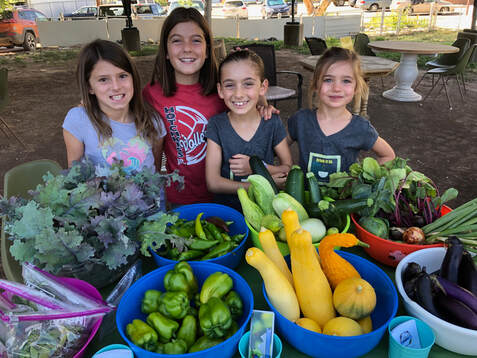 These young gardeners proudly display their tasty produce from the Hotchkiss K8 summer garden club (left: Ava Caldwell, Avery Flores, Anja Ullman, Whittier Ullman). (Photo credit: Angela Flores) Getting kids involved in growing their own food can be fun for both of you! What better way to teach kids about where their food comes from and the importance of healthy and local foods than growing your own at home? Watering, weeding, and caring for living things also teaches kids an important sense of personal responsibility, as well as patience.
Involve your kids in the entire process—start your garden planning early, and allow them to make the decisions (with a little guidance) so they feel ownership of the project. What kind of vegetables do they want to grow and eventually eat? If you’re using pots, help them research what size of pots those plants will need, and where in your yard to put them so they have the kind of sun or shade conditions they need to thrive. How often do you need to water, and whose responsibility will it be to make sure they’re getting enough water? How will you tell when they’re ready to eat? And, perhaps most importantly, let them plan out what you’re going to cook with each vegetable when they’re ready! There are many ways you can involve kids in garden planning and care, and they’ll learn a lot in the process. Here are a few quick and easy ways you and your kids can get started with a backyard garden. Building a garden bed can be time consuming, and it takes up a lot of space. If you’re not ready to take the leap to a full-on garden bed, potted plants can work well, too. There are a lot of vegetables that will grow in pots including tomatoes, beets, leafy greens like chard and kale, hot or sweet peppers, lettuces, onions, and even beans (as long as you have something for them to climb on). Just make sure the pots you use are big enough for the plants you want to grow—tomatoes, for instance, will need at least an 18-24” pot—and use a high quality potting soil that’s made for vegetables, so they’re getting all the nutrients they need. Sun-loving vegetables like tomatoes and peppers should be in a bright, sunny place, but make sure more delicate plants like lettuces and spinach have a little bit of shade to provide relief from the heat. Another easy way to bring the garden into your kitchen is with herbs. Not only will your kids get to participate in the growing process, but planning the meals you’ll make becomes even more fun! One idea is to start with some of your kids’ favorite foods, and ask them to help you research what herbs they’ll need to make it. Do they love lasagne or pizza? Oregano is critical to the Italian flavor. Are they big on pesto? Basil can be your crop of choice. Start with the final product, and work backwards to help them figure out what ingredient you’ll need to make it happen. Herbs are also great because almost all of them will thrive in small pots, which are convenient and can usually be grown indoors. You could do a number of different herbs—thyme, oregano, sage, rosemary, etc.—or just stick to one that requires a larger quantity, such as basil to be used in a batch of pesto. In addition, many of these herbs can continue to be grown in their pots indoors year round, providing fresh additions to your daily cooking beyond the normal summer garden. Your kids can help pick out or decorate fun pots, fill them with soil, start seeds or transplant already-started herbs, and pick out the spot where the plants will be happiest as they grow. Another good option to start with is lettuce. Lettuces thrive in cooler temps, like the early spring season or in the fall, and they’ll provide a continuing source of salads for your dining room table. They are easy to start from seeds, and there are many interesting and colorful varieties to choose from. Salad greens are a perfect farm to table connection—clip off some lettuce leaves, whip up a quick vinaigrette, and combine them into a fresh salad in less than 5 minutes. Lettuces have fairly shallow roots, so you can get away with a long and low container to house your whole lettuce garden. Have your kids help you pick out a variety of colorful and unique lettuces from the seed pack selection at your local nursery, fill your container with high quality soil, and plant rows of various lettuces to create a beautiful and tasty little crop of salad greens. Many businesses have stacks of pallets that they’re happy to get rid of—with a quick search on Craigslist you’ll be able to find a plethora of pallets, ripe for the picking. These pallets can be repurposed into a fun and economical vertical or horizontal garden with just a little work. This is a really neat way to create a space-saving and beautiful garden for a small backyard. There are hundreds of how-to guides for making a pallet garden that you can find online with a quick online search, but the basic process involves stapling landscape fabric inside the pallet to create multiple vertical rows for planting your vegetable garden. The main thing to be careful of in general, but especially with kids, is that pallets can have sharp nails and splinters, so be very conscious of that when you’re picking out pallets and building your garden. You can get your kids involved filling it with soil and planting all of the vegetables, or even a sweet treat like strawberries. You and your kids can also make an art project out of decorating the pallets with a bit of paint and creativity, to make a beautiful home for your small garden! With these simple ways to get a garden started with your kids, you’ll be able to teach them about their food and where it comes from, involve them in research and planning, and cultivate responsibility and patience. Have fun, and enjoy the fruits (or vegetables) of your labor! 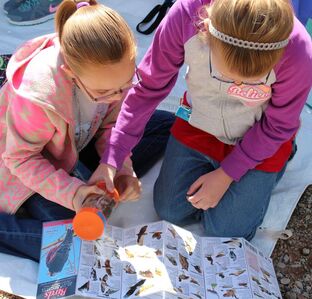 Nature guides are a great way to identify critters. These girls are using a bird guide to help them identify local birds likely to be seen along the Gunnison River. Colorado is famous for its great outdoor activities. Many of these activities require money or experience to get involved. Snowboarding, rock climbing, climbing 14ers, or riding snowmobiles or ATVs require both. Getting started in outdoor activities can be easier than you think, though. It is widely known that being outdoors helps our physical and mental health. So, here are a few easy and cheap ways to get outside on your own, or with others. Hiking: One of the best outdoor activities to start with is hiking or trail walking. The only real required equipment to start is a good pair of shoes. This cannot be stressed enough. Poor fitting or flimsy shoes can result in some frustrating experiences like blisters and sore feet. It can also result in safety issues from poor footing in steep or slippery trail areas. This does not mean you have to purchase expensive hiking boots or shoes, but sturdy, well-soled shoes with a good fit will be comfortable and safer. Next, and very importantly is to know where you are going. The COTREX app is a great trail application that has many hiking, biking and other trails all over Colorado. It includes important trail information such as distance, elevation changes, surface etc. Second, start with trails closer to your community because these are typically well signed and shorter. These will help you get a sense of how you feel on a variety of distances in different topography. Bring water and extra clothing layers for changes in temperatures. Before you know it, you will have gained experience, stamina and a little more equipment. You will be ready for longer day hikes on our public lands. Some of the most memorable experiences are being outdoors and seeing, hearing, smelling, or feeling nature around us. A short trail walk in the same location in winter, spring, summer and fall will result in amazing differences in what you experience. Tracks and Scat Hunting: It is surprising how many species of wildlife are close to, and even inside, towns in Colorado. Recently, I was on one of the concrete trails early in the day in Montrose after a slight snow fall. I was excited to see fox tracks, and a beaver track including drag marks where the beaver had pulled a tree across the trail. In addition to small mammals and rodents, there are great bird and waterfowl tracks all around communities. Even more fun than tracks by itself, is to add scat identification. Identifying scat (or poo), and the creature associated with it, is a surprising amount of fun. Different families of animals will have different scat based on what they eat and how it is processed. Herbivore scat looks very different from carnivore or omnivore scat. In addition to tracks and scat, there are other ‘signs’ you can find like trees felled by beaver, or deer antler rubbings on trees, or the mud slide of a river otter. It is a little like a nature investigation. Best of all, there is no real cost to get started because track and scat guides can be pulled up online, obtained at many wildlife or public land offices, or you can also check out scat and track guides at your local library. As with all activities involving wildlife, the goal is to not disrupt the actual animal, so observe from a distance or just look for the sign and know they are around. Star Gazing: Similar to tracks and scat, astronomy guides are available as apps or online. You can also find printed materials at your local library. Make sure you have an app, or guide, that covers your location and the current time of year. The key to star viewing is clear night skies with as little ambient light as possible to not wash out the constellations (so get away from streetlights, vehicles, etc). One of the easiest constellations to identify is the Big Dipper. National and state parks have astronomy programs you can also attend where the local astronomy clubs bring out amazing telescopes that bring the planets, comets, or other astronomical features more into focus. These and other programs also add information to make your future star gazing even better. Outdoor Discovery Apps If you have a ‘smart’ phone, you can also use several outdoor applications in outdoor discovery. Applications like Agents of Discovery, INaturalist, Merlin, geocaching and others are very user friendly, and allow you to choose what you want to focus on. Some have missions or challenges, others are to help id any type of natural item out there (plants, animals, rocks, birds, you name it!). Even though we all need less screen time, this is a way to be outdoors and focus on what is around us with the assistance of technology. In addition to the above recommendations, other cheap and easy outdoor activities can be as simple as flying a kite, or making our own ‘Outdoor Bingo/Scavenger Hunt’ where you can look for things like a rock the size of a toaster, any bug under a rock, or any bird with white and black feathers. Another recommendation is to find a mentor who is already doing things you are interested in, and ask them to show you how to get started. When I first moved to Montrose, a co-worker showed me all his favorite trails, and areas to hike or bike. Many of those trails mean a lot to me. I have since taken my kids and hopefully soon my grandkids out to the same areas. You don’t need to be an expert or wealthy to spend time outdoors, there are many ways to get started and the benefits are endless! 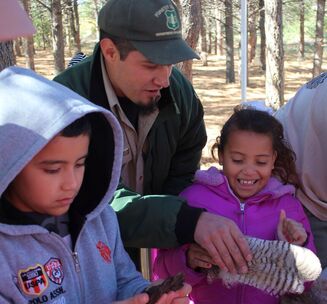 Local youth learn about owl adaptations for flying at night from a Forest Service Wildlife Biologist. By now we have all heard how vital it is for the health and well-being of our youth to be active in the outdoors. Not only that, but nature immersion helps our youth develop resiliency and confidence - what kid doesn’t need more of that these days? Unfortunately, many families living in rural Colorado have incomes where they can’t afford the outdoor activities so popular in our local area. The good news is that kids - specifically those living in Montrose and Delta Counties - are lucky, as new opportunities to help them experience outdoor activities are continuing to emerge. Efforts to expand access to the outdoors have been growing over the past few years in Colorado, and outdoor equity groups have been finding new sources of funding. Inclusiveness and equity are two of the main components of the Colorado Outdoor Equity Grant Program (COEGP) created in 2021 when Governor Polis signed House Bill 21-1318, funding over $2 million of awards each year to organizations dedicated to getting underserved and underrepresented youth connected to outdoor activities. Colorado Parks and Wildlife sponsor the COEGP, managed by a board who has developed guidelines allowing each community flexibility in identifying their community values, priorities, and resources needed to achieve their goals for “leveling the playing field.” Whatever each community develops as their strategy, one of the focus areas of the COEGP is creating opportunities that instill a sense of wonder, excitement, and responsibility for the environment in Colorado youth and families. The COEGP aims to increase the inclusivity of underserved youth and families in the outdoors. What does “underserved” mean? As defined by the COEGP board, underserved youth participants are “youth and their families who face racial and environmental inequities, are low-income, are from the LGBTQ+ community, are disabled, or are members of a Federally recognized Tribe.” Friends of Youth and Nature (FOYAN) has been awarded funding in 2023 from this Program to provide the needed assistance for connecting our youth to the outdoors through our partnership with youth groups comprising the Together for Resilient Youth coalition (TRY). Our award of $67,180 has enabled us to reduce the barriers for our TRY youth coalition members to get outdoors. This hard-working group of youth services providers in Delta and Montrose Counties has come together for three years now to offer outdoor experiences to our youth most in need. These youth are receiving vital services through participating organizations including Black Canyon Boys and Girls Club, CASA7JD, Families Plus, Haven House for the Homeless, Partners West, Outer Range, and Montrose Recreation District. The Colorado Outdoor Equity Grand award has given FOYAN the opportunity to offer five outdoor events from 2023-24. This has allowed us to build up a mountain bike fleet managed by Montrose Recreation District that is available to these groups free of charge at events or for group checkouts. This bike fleet will be available long after the end of this grant award. In addition, personnel of these organizations receive a stipend to recruit, organize, and transport youth to the event venues. FOYAN also provides food for all participants, and has helped establish an additional free gear library managed by Partners West of Montrose and Ridgway State Park. Since our grant award in March of 2023, FOYAN has offered several events for these youth and their families. In April of 2023 Ridgway State Park hosted over 120 participants who learned archery, fishing, fish printing, and birding skills. In June, the TRY youth participated in one of two raft trips on the Gunnison River, and our inaugural bike rodeo at Cerise Park in Montrose. We also had another trip to Ridgway State Park where youth and their families learned to paddleboard, bike, swim, and fish. In October, we shared the Outer Range Campus in Montrose to learn about outdoor careers from representatives of the United States Forest Service, Colorado Parks and Wildlife, Bureau of Land Management, Colorado Canyons Association, and Montrose Recreation District. In 2024 we will again offer most of these amazing outings, as well as have a fun day in the snow on Grand Mesa learning to cross-country ski, snowshoe, sled, build snow sculptures – and hopefully ice fish! We are grateful to the Colorado Outdoor Equity Board for the support needed for helping us to break down the barriers to outdoor recreation for our Western Slope youth participants. Be sure to learn more about this invaluable program at: https://cpw.state.co.us/aboutus/Pages/Outdoor-Equity-Fund.aspx. 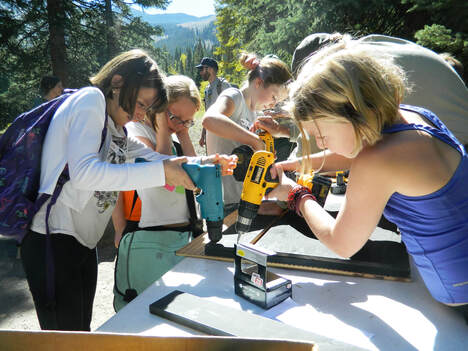 Students build blue bird nesting boxes as part of a Public Land Day celebration on the Grand Mesa, Uncomaphgre and Gunnison National Forest. This effort is to help kids learn about our local natural resources on public lands and engage in actions that teach them how to become stewards of our environment As the end of the year approaches, many households are starting to consider where to direct year-end giving dollars. There are many crucial needs in our community that deserve support; in a perfect world, we would be able to fund every cause, but in the real world you’ll need to make choices about where to contribute your year-end donations in a way that aligns with your values and your hopes for the future. If youth mental health, resiliency, and public lands are important to you, then supporting programs to get western slope kids into outdoor educational and recreational programs provides a long-term solution for those issues facing our youth, and our community at large. What impact does an early introduction to the outdoors have on who a child will become as an adult, and how are they affected physically, mentally, and emotionally as they grow up? As it turns out, childhood exposure to outdoor activities can be directly connected to positive long-term outcomes in these areas. Physical Wellness Children are increasingly neglecting outdoor play in favor of the digital world—reducing kids’ screen time is often a major struggle for parents. Computers, mobile devices, and video games are passive forms of entertainment, and they don’t call for physical coordination, strength, endurance, or any of the other attributes necessary for a healthy body. Outdoor play, on the other hand, promotes all of these things, and is a natural method of encouraging physical activity in young people. A 2015 metanalysis of studies regarding the effects of time spent outdoors on children found, “outdoor time is positively related to physical activity and negatively related to sedentary behavior in children aged 3–12 years'' (https://www.mdpi.com/1660-4601/12/6/6455). The more outdoor time children have, the more physical activity they take part in and, conversely, the less sedentary behavior they display. Mental Health & Resiliency Many people spend time outdoors because it brings them a sense of happiness and well-being. If adults need to get away to nature every now and then to stay happy, surely children must benefit from these quieter natural spaces as well. Perhaps unsurprisingly, a 2018 study showed that the more time children spend in nature and the greater sense of connection they personally feel with nature, the less likely they are to experience psychosomatic symptoms such as irritability, anxiety, difficulty sleeping, headache, stomach ache, backache, and other maladies. The benefits start with as little as 30 minutes of outdoor activity per week (https://pubmed.ncbi.nlm.nih.gov/29679604/). As we consider ways to address the increasing prevalence of mental health challenges in young people, including a disproportionately high suicide rate in our area, outdoor activities can play a crucial role in building resiliency and promoting mental well-being in our youth. Stewardship of Public Lands Physical activity, cognitive development, and emotional well-being are relatively easy to quantify in research. But what about something like the desire to preserve our natural areas, or an understanding of the importance of good stewardship practices for our public lands—can we quantify these outcomes? Though it’s more difficult to show a correlation between time spent outdoors during childhood and an individual’s likelihood to become a good environmental steward, it has been shown that the amount of time spent outdoors has a direct correlation with a child’s feelings of connection with nature. This sense of connection with the natural world then has a direct influence on behaviors related to environmental stewardship in children such as, “conserving water, turning out lights, recycling, talking about the environment, and picking up litter” (https://scholarworks.umass.edu/cgi/viewcontent.cgi?article=1001&context=nerr). The more time young people spend in the outdoors, the more likely they will become involved with environmental stewardship and preservation of our public lands. As you consider how to distribute year-end donations in our community in a way that most aligns with your values, know that when you donate to organizations that provide opportunities for local kids to get outdoors for science education and recreational field trips, you’re not only directly contributing to their physical and mental well-being—you’re also helping to raise a generation that will value our natural environment and ensure the preservation of public lands for years to come. 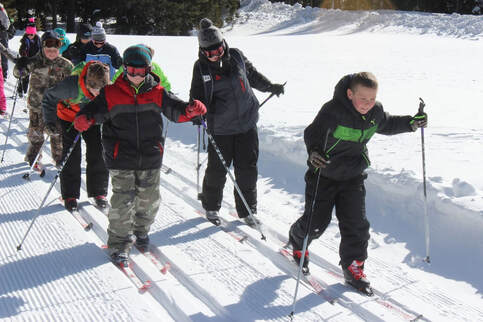 Fourth grade students spent a morning on the Grand Mesa National Forest learning to cross-country ski. It isnt as easy as it looks with very different levels of physical coordination but the kids had a great time and learned some endurance skills! Friends of Youth and Nature (FOYAN) promote these types of outings to get more youth outside in Delta, Montrose, Mesa and Ouray counties. What impact does an early introduction to the outdoors have on who a child will become as an adult, and how they are affected physically, mentally, emotionally—and even morally as they grow up? As it turns out, we can directly connect childhood exposure to outdoor activities with positive long-term outcomes. Time spent outdoors, whether in play, outdoor education, recreation, or even gardening can play a crucial role in building resiliency and have a positive impact on the mental and physical well-being in our youth. Playing outside helps children use their imaginations to develop creative thinking and problem solving skills. Many outdoor activities require kids to work together and communicate in order for everyone to have fun or to accomplish a common goal. It has also been discovered that a bacterium in the soil increases serotonin in the brain and improves mood. Who knew that getting dirty is a good thing! The more outdoor time children have the more physical activity they get. Outdoor play promotes physical coordination, strength, endurance, attributes necessary to develop a healthy body and mind. It is an easy and natural way of encouraging physical activity in young people. As adults, many of us have learned an escape to a special place in nature helps us relax. A visit to our nearby public lands to exercise, walk with a friend, or enjoy the beautiful weather certainly helps us recharge and re-set mentally and emotionally. Our kids need that too! The more time children spend in nature and the greater sense of connection they personally feel with nature, the less likely they are to experience symptoms such as irritability, anxiety, difficulty sleeping, headache, and other physical afflictions. Nature's fix helps them build mental and physical resiliency. It has been shown that the more time we can get younger generations to spend in the outdoors, the greater sense of connection they will feel with nature, and the more likely they will become involved with environmental stewardship and preservation. We want the next generation to feel ownership towards our public lands and care for our natural resources. After all, we are part of nature. Simple actions such as conserving water, turning out lights, recycling, establishing native plants, talking about the environment, and picking up litter is a great start. At Friends of Youth and Nature (FOYAN), we believe strongly in both the individual impacts that activities in nature have on each young person, as well as the broader long-term goal of creating another generation who feel strongly about the importance of maintaining and safeguarding our public lands for the benefit of all. Our goal is to continue supporting programs that have both a personal and philosophical impact on the future of our natural areas, in order that future generations may enjoy these spaces for many years to come. We would like your support to help FOYAN continue to provide a variety of outdoor experiences for our local youth. In our sixth year as a nonprofit, we have served over 8,000 youth and their families with outdoor activities and environmental learning opportunities. Please consider donating to FOYAN through Colorado Gives on or before December 5th, where your donations will be boosted through the incentive fund. Give Where You Live and donate here to help us make the biggest impact: www.coloradogives.org/organization/friendsofyouthandnature 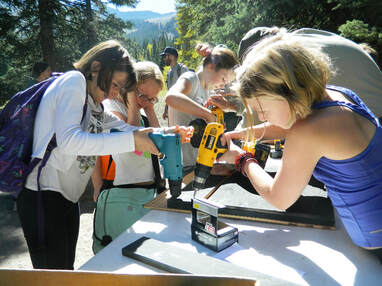 Students from Delta County School District put together blue bird nesting boxes for their school yards during a public land day field trip. This was a stewardship project focused on providing more nesting habitat for Mountain and Western Bluebirds in our area. In the decade since Richard Louv's book “Last Child in the Woods”, educators, parents, health providers, conservationists, and administrators have been rethinking the nature/child relationship. According to Lesley University, research is showing us the powerful, positive impact on the health and well-being of children when they are connected to their environments. Environmental educators have been instrumental in creating awareness, programs, and opportunities for children of all ages to connect with the natural world. We know that our future depends on citizens who will have a sense of ownership and stewardship of the earth. Of primary importance in these efforts is making sure children are engaged in the natural world. Here are a few tips for doing just that: Allow children free time in the natural world. This doesn’t mean organized sports or adult-directed activities, but time to explore, play, and invent. It might take the form of building a fort from branches found in the woods, wading in and observing a stream, climbing a tree, or collecting natural objects like shells, rocks, or acorns. These could be favorite memories as your children grow older! Be a Mentor Rachel Carson, in her 1956 article entitled “A Sense of Wonder,” asked adults to find one child to mentor and get him/her out in the natural world. As a teacher or a parent, it is important to share your own love for nature. Your enthusiasm will spark the same in children and youth, encouraging them to stop and smell the roses, so to speak, to look closer at life on the ground and in the soil. You can share your knowledge of local trees, wildlife, and plants. Learn together. (Whether it was a parent, grandparent, or other relative or friend, most adult conservationists can point to those people in their lives who had significant influence on them.) Friends of Youth and Nature has many mentoring opportunities at events we facilitate for youth. Create opportunities for children to have experiences with the more-than-human world. Volunteering at a wildlife rehabilitation center, snorkeling on a vacation, or simply walking in nature and having surprise contact with local species. These are all important ways children can come into contact with the species that share their home. Speak of them as friends and talk about how they are connected to humans. Study the local bio-region. Guide children to understand the area they live in: for instance, where their water comes from and where it goes once it leaves their home or school; what plants are native or non-native, wild or cultivated; what animals share their home with them; how people make a living from the earth’s resources; and what natural wonders—ponds or streams, marshes, hills, and so on—are nearby. Enroll your child in a real outdoors camping program. In addition to fun, physical activities, find a camp where children sing by the campfire, sleep out under stars, learn to make bows and arrows, learn to steer a canoe, or learn to use a bow drill to make a fire. Get to know your state or national parks. If you are lucky enough to live near a protected area, visit it. These parks are protected for a reason and offer wonderful opportunities for hiking and exploring and experiencing the sounds, smells, and excitements of unfamiliar natural environments. Examples include Black Canyon of the Gunnison National Park, Colorado National Monument, Gunnison Gorge National Conservation Area, McInnis Canyons, and Dominguez/Escalante NCA. Local state parks managed by Colorado Parks and Wildlife have activities and programs for kids as well. Volunteer project– each season, choose one environmental volunteer project in your community. This is a great opportunity to engage children in real life actions. Whether it is planting trees, creating a garden, pulling invasive species, or picking up garbage—begin the stewardship mindset. It’s never too early to start instilling those values. The satisfaction of working together as a family while making a difference feels great. Check out volunteermatch.org for local opportunities or organize your own project in a local park or on public land. You can also check with any of the many provider organizations on the Friends of Youth and Nature website for other opportunities. Stewardship ideas for teens and young adults: Many of the above suggestions can also apply to teens and young adults as it’s never too late to instill a stewardship mindset. There are also organizations that provide opportunities for individuals and families as well: Volunteers for Outdoor Colorado allows you to volunteer as a youth or as a family (AGES 6+). Volunteering with Volunteers for Outdoor Colorado (VOC) is a great way for your children and family to learn about our state's diverse outdoor places and how to care for them in a fun and unforgettable way! Find out more at: Volunteer | Volunteers for Outdoor Colorado (voc.org) The Western Colorado Conservation Corps (WCCC) is a program of Mesa County Partners, a nonprofit organization based in Grand Junction, Colorado. Check them out at: Western Colorado Conservation Corps (wcccpartners.org) Friends of Youth and Nature is a non-profit that promotes opportunities for youth and families to get outside, experience outdoor activities, and explore nature. Follow our outdoor news blog and receive monthly tips on connecting your children to nature. Learn more, visit: www.friendsofyouthandnature.org 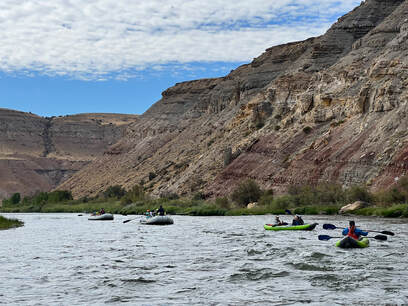 Cottonwood Elementary fifth graders embark on a 3 day rafting trip on the Gunnison River with Colorado Canyons Association. Transported by rafts and duckies students got a close up interaction with the river and learned of its history. (Photo credit: Doug Goodwin) On a brisk, but sunny day in late September my 5th graders circled up next to the Gunnison River. This was to be day one of three days over which all three of the 5th grade classes from Cottonwood Elementary School would go rafting on the Gunnison River to learn about river ecology, navigation, Native Americans, and hopefully, a bit about themselves. One of our guides from the Colorado Canyons Association led them on one of many team building activities for the day. “As you go around, say out loud your name and what kind of animal you feel like today.” The kids came up with great names for themselves. I said I felt like a border collie because of my teacher role of keeping everyone together. I would quickly find out though, we were in good hands with our guides for the day. After a thorough river safety talk the kids split up into boat groups, loaded up and hit the river. The day’s float would be on a beautiful class 1-2 stretch starting at the Pleasure Park and going 6 miles downstream. In addition to the 3 16’ rafts, we also had 3 inflatable two person kayaks known as duckies. Including myself, I was fortunate to have a couple brave parents to help rotate kids through the duckies and learn about how to pilot the smaller boats. As with most river trips, all the stresses of planning and preparation melted away once we were on the river. The miles slowly drifted by. Along the craggy cliffs kids kept an eye out for wildlife. Their keen observation paid off as they spotted several bald eagles either in flight or nesting within the crags. At a giant cottonwood tree, the kids listened intently as a former high school teacher turned river guide told them a Native American story about the stars, and the trees and the spirits. From there we headed downstream to Eagle Rock Shelter-one of the oldest Native American sites in North America. Nearly 13,000 years ago this area was frequented by ancient people. The students learned about the Utes and other Native Americans who occupied the site. Looking carefully, students spotted dozens of both pictographs and petroglyphs among the contours of the rock. From there we headed back down the trail to the awaiting rafts, lunch, and more river time. The kids were in great spirts. Prior to loading up, they frolicked in the water like otters and laughed, and lived the river life. In all too short of a time, we were at the takeout. Under the direction of our guides, the kids helped organize their life jackets, got their packs out of the dry bags said thanks and loaded up on the big bus. I want to thank a variety of people who helped make this trip possible for our 5th graders. First off, the Colorado Canyons Association, who worked with us on pricing and scheduling-not to mention their professional, informative staff. Also, the students and parents helped. For several weeks leading up to the trip 5th graders worked hard in the mornings before school selling pickles to help raise money. Friends of Youth and Nature contributed a sizable amount to help get our kids on this trip. The Upper Gunnison River Water Conservancy District and Forever Our Rivers also helped us. In addition to this, the Montrose Rotary Club pitched in. Last, but not least, the Cottonwood Elementary School PAC gave us the final financial push to make this trip possible. The importance for students to experience trips like this cannot be understated. Many students-including myself as a youth, thrive in outdoor settings. They realized that learning happens all around us. Students gain confidence from outdoor experiences and this confidence can transfer to other learning avenues. As a former river guide and outdoor education instructor, it was incredible to get our students on the river and give them an opportunity to experience something many of them had no idea existed. I know with our students that seeds of curiosity were planted and that their learning will continue to grow-both in the classroom and outside. 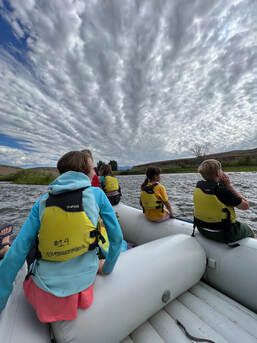 Students enjoyed their float on the river (photo credit: Doug Goodwin)
|
Blogs for Summer! DIY Summer Camps A Summer backyard Bucket List Hiking with Children 101 Kids, Dogs and Hikes a Winning Combination Getting Outdoors is Easier than You Think Categories
All
Archive
Archives
July 2024
|


 RSS Feed